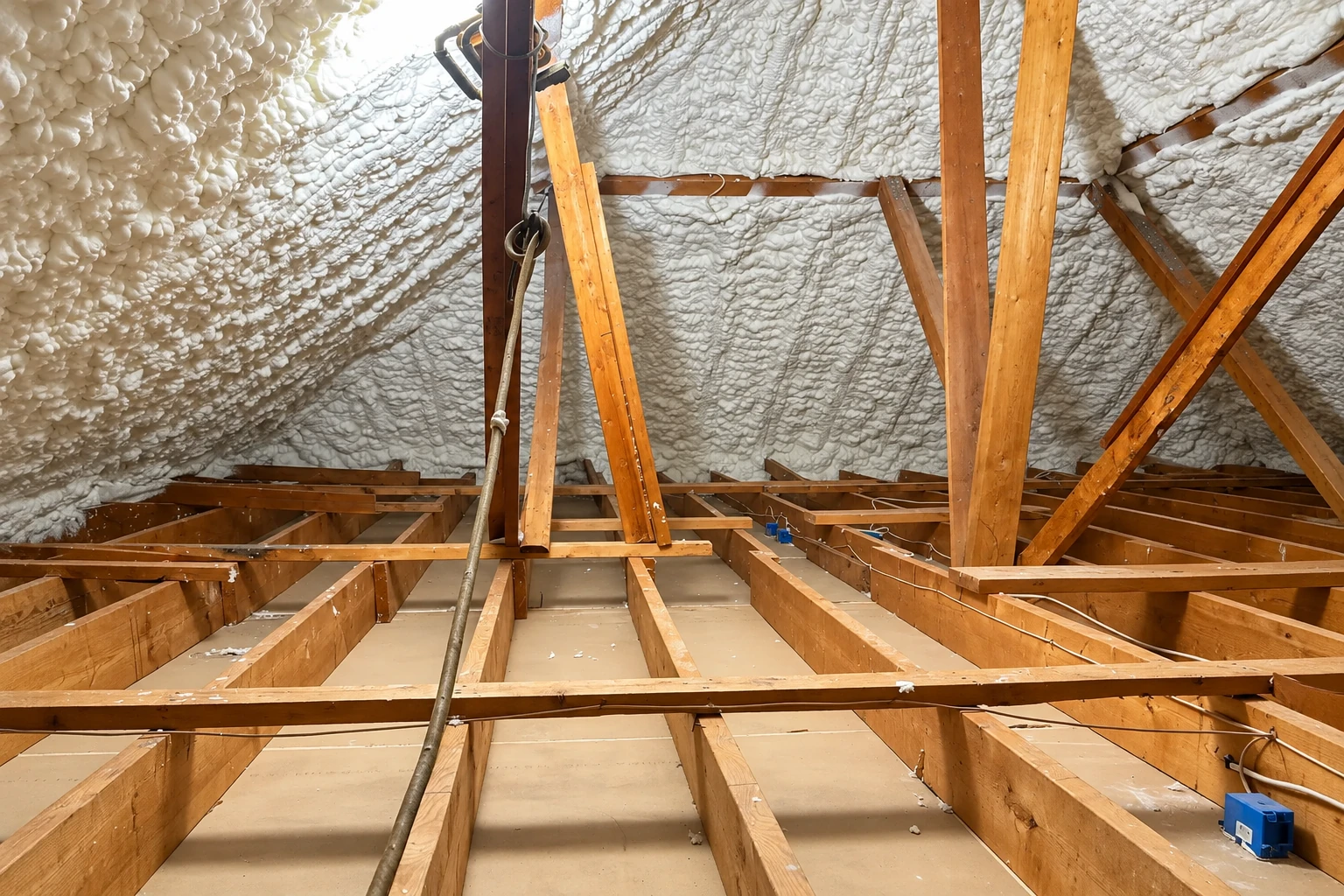
Before we seal anything, the attic has to be sound, so wet insulation, moldy or rotted rafters and joists, vents blowing moist air into the attic and poor ventilation all get corrected first, since sealing over them only hides the problem. If we find rot, a roof leak or old wiring, we stop and tell you what needs fixing, and knob and tube wiring from houses built before 1930 is one of those because it can be a fire hazard where it touches insulation. Old vermiculite fill should stay undisturbed until an approved lab tests it for asbestos, and your local health department can name one. Once the attic is ready, we go after the big openings first, where walls meet the attic floor, around dropped ceilings and behind kneewalls, the short walls under a sloped roof, because that's where most of the air gets out.
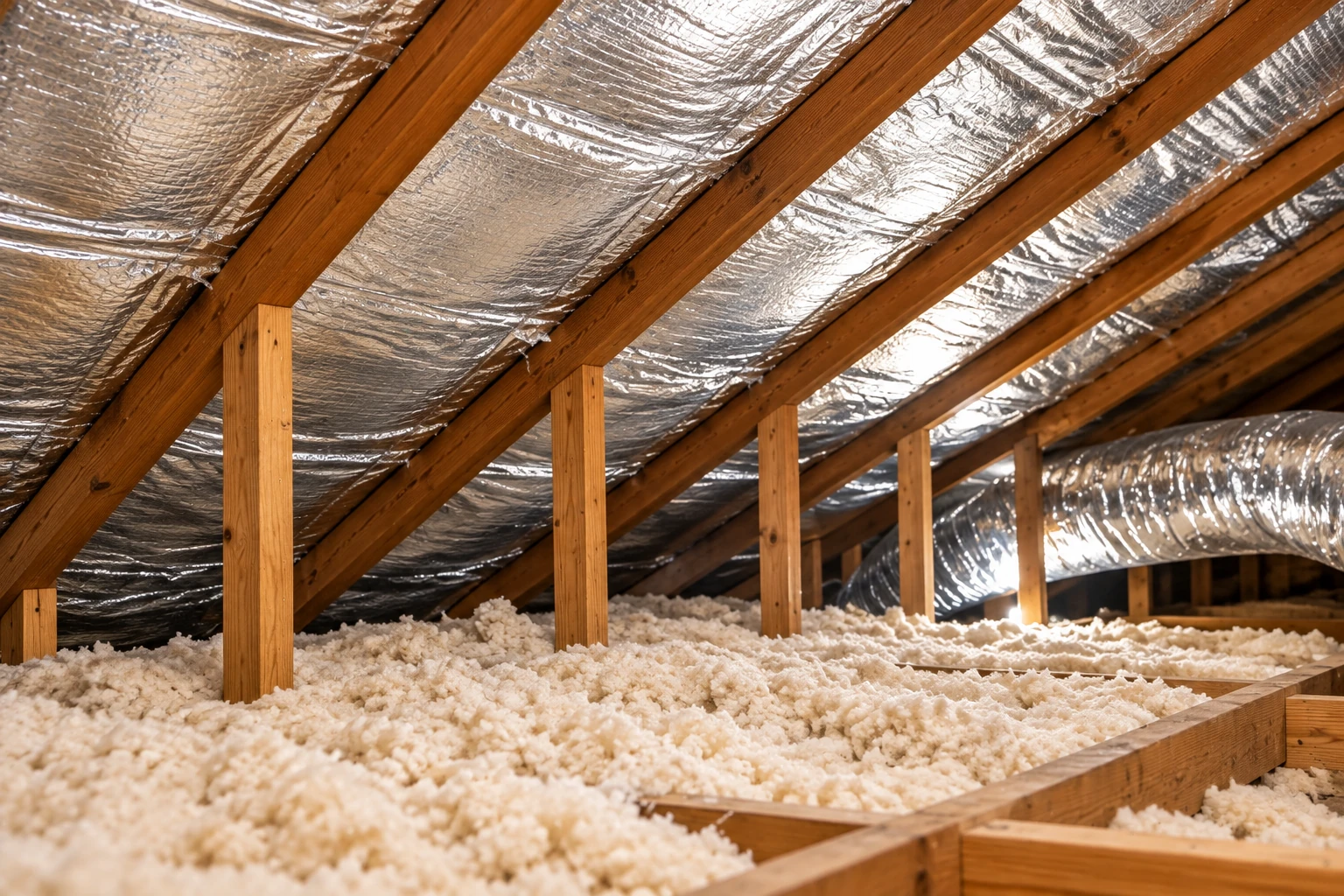
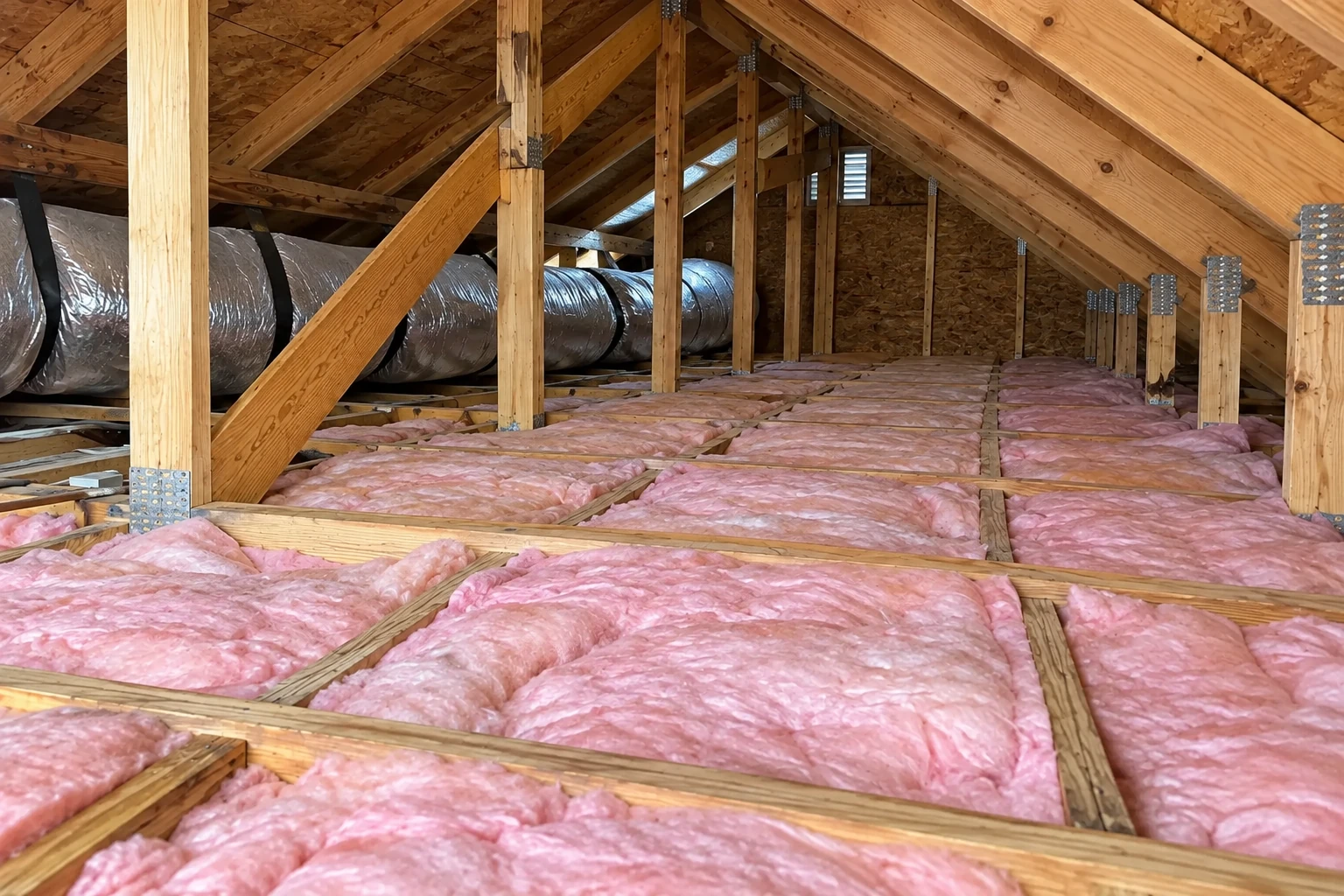
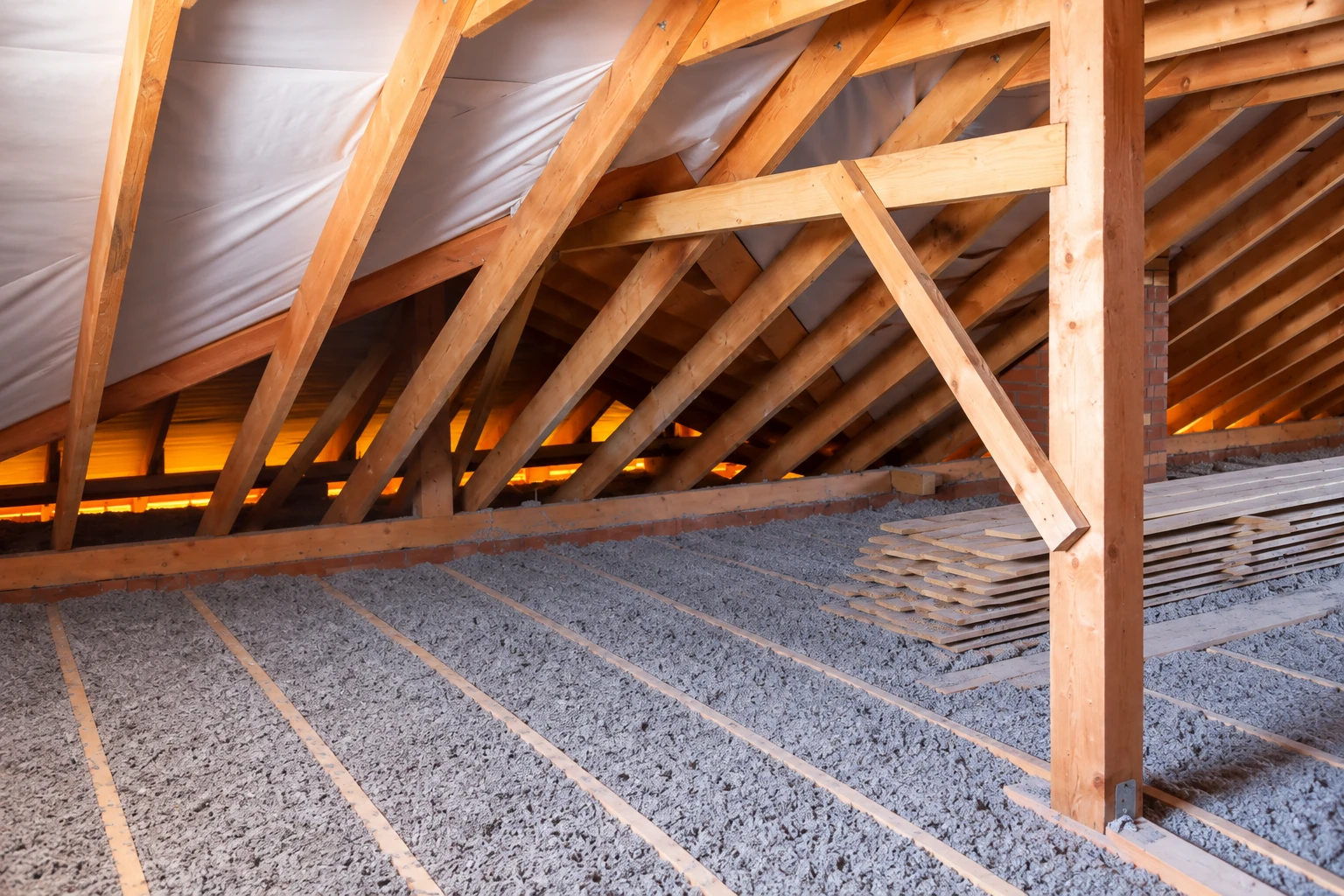
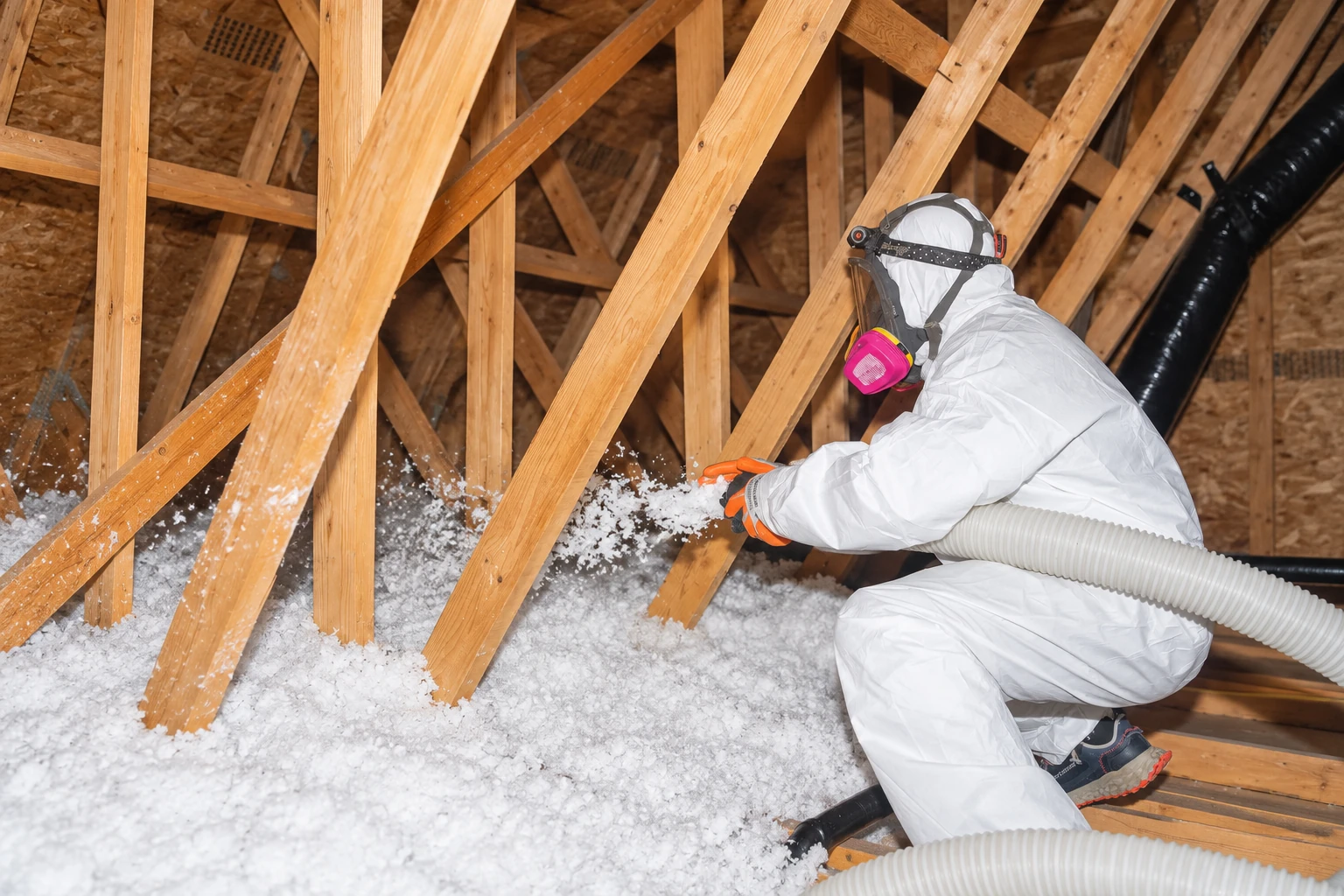
Sealing is usually the first stage of a bigger job, and if your attic also needs more insulation, we can add retrofit insulation once the floor is tight. Foam costs more and seals air while it insulates, so spray foam insulation earns its price when your ductwork runs through the attic. Otherwise, sealing the gaps and topping up blown-in insulation, loose fill blown through a hose, usually wins.